

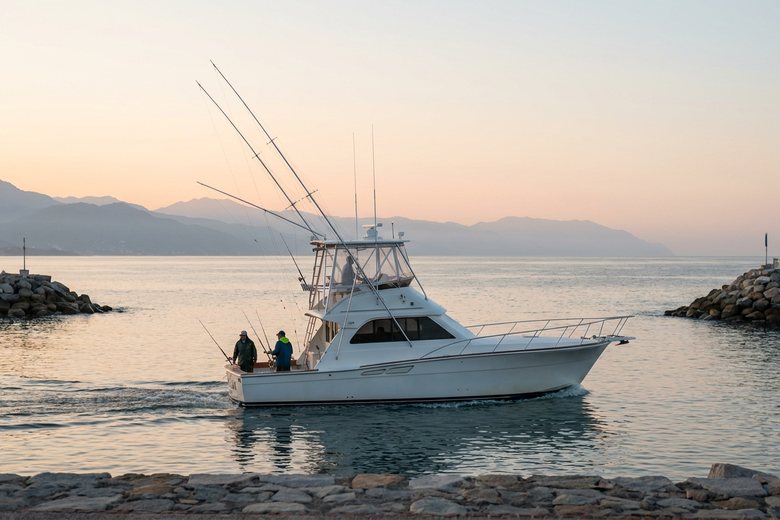
Quick answer: Banderas Bay fishes all year, but the species change with the water. Summer and early fall (June to October) bring blue and black marlin, yellowfin tuna, and dorado to the offshore banks at La Corbeteña and El Banco; winter (November to March) brings calm seas, sierra, striped marlin, and sailfish; roosterfish and jacks hold inside the bay most of the year. A half-day panga inside the bay is the easy first trip; a ten to twelve hour sportfisher day is the marlin trip.
Before you book any Puerto Vallarta fishing charters, ask a captain three things: whether fishing licenses are included for everyone on board, what the catch policy is, and what happens if the port captain closes the harbor for weather. Here is the full picture, from the grounds to the grill.
In short
Banderas Bay offers inshore roosterfish, jacks, snapper, and sierra within minutes of Marina Vallarta, sailfish and dorado at the bay mouth, and blue and black marlin plus yellowfin tuna on the offshore seamounts of La Corbeteña and El Banco. Summer through fall is the big-fish window; winter is calm and productive inshore. Choose between pangas, super pangas, cruisers, and sportfishers by group size and target, confirm licenses and catch policy before paying, follow CONAPESCA bag limits, release billfish, and have a marina restaurant or your rental kitchen cook the dorado.
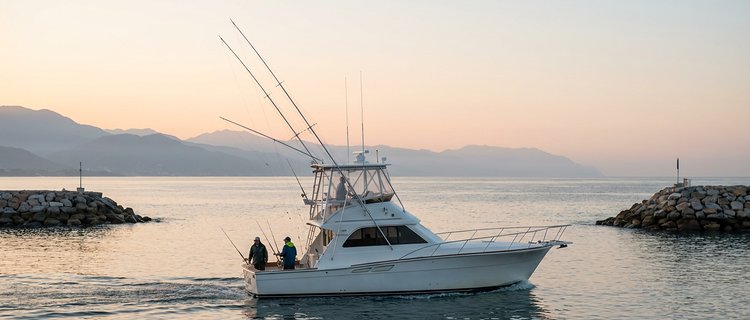
The grounds: inside the bay, the bay mouth, and the blue water
Banderas Bay is one of the largest bays on Mexico's Pacific coast, and the fishing is layered by distance. Inside the bay, pangas work the rocky points, the river mouths (the Ameca at La Desembocada, the Río Cuale below Olas Altas), and the structure off Conchas Chinas and Mismaloya. This is roosterfish, jack crevalle, snapper, bonito, and sierra water, often within sight of your condo, and it is where most half-day trips happen.
Toward the bay mouth and the Marietas Islands the water deepens fast. Sailfish and dorado cruise this edge for much of the year, and the Marietas hold tuna in the fall. The islands are a protected national park, so boats fish around them, not in the restricted zones; for the snorkeling side, our Islas Marietas guide covers permits and tours.
Then there is the blue water. Two seamounts outside the bay, La Corbeteña and El Banco, made Puerto Vallarta's reputation. Corbeteña is the closer of the two and El Banco sits roughly sixteen miles beyond it, so a serious offshore day means two and a half hours or more of running each way. That is where blue and black marlin, yellowfin tuna, and the biggest dorado live, and why offshore charters run ten to twelve hours and leave in the dark.
What bites when: Puerto Vallarta fishing by month
The true version of a Puerto Vallarta fishing charters calendar is that something is biting every month, and the species shift with water temperature. Warm summer water brings blue and black marlin, yellowfin tuna, and dorado to the offshore banks. Cooler winter water brings sierra and striped marlin, with sailfish and roosterfish present most of the year. Captains read the water daily, so treat the table as a planning guide, not a promise. No captain can guarantee a fish, and the good ones say so.
| Months | Inside the bay | Offshore (Corbeteña, El Banco) | Water and weather |
|---|---|---|---|
| December to February | Sierra at their best, roosterfish, jack crevalle, snapper | Striped marlin, sailfish, yellowfin tuna lingering into December | Cooler water, calm mornings, afternoon breeze; whale season on the ride out |
| March to May | Sierra tapering, roosterfish building, snapper and jacks near river mouths | Sailfish, early blue marlin from May | Dry season, flat seas, warming water |
| June to August | Roosterfish peak, jacks, dorado pushing inside the bay | Blue and black marlin peak, yellowfin tuna, dorado | Warm water, rainy season afternoons; go early |
| September to November | Roosterfish, jacks, snapper, tuna around the Marietas in the fall | Marlin and sailfish secondary peak, dorado and yellowfin strong; November tournament | Seas settle as the rains end; the classic big-fish window |
If you remember one thing: summer and early fall for the biggest offshore fish, winter for calm seas and a full inshore box. Families and first-timers do better inside the bay, where a four to six hour morning produces action without the long run; see our Puerto Vallarta with kids guide for more family days on the water.
Choosing a charter: boats, trip lengths, and what is included
The boat decides the day as much as the season does. Here is how the fleet breaks down.
| Boat type | Typical capacity | Best for | Typical trip | What to expect |
|---|---|---|---|---|
| Panga (open skiff, 22 to 26 ft) | 2 to 4 anglers | Inshore trips, budget days, families with older kids | 4 to 6 hours | No shade or head on most boats, fast and fun, the local way to fish the bay |
| Super panga (26 to 32 ft) | 4 to 6 anglers | Inshore and bay-mouth trips, a step up in comfort | 5 to 8 hours | Shade canopy, sometimes a small head, can reach the Marietas edge |
| Cruiser (32 to 42 ft) | 4 to 8 anglers | Mixed groups, bay-mouth sailfish, some offshore days | 6 to 10 hours | Cabin, head, galley, fighting chair on many boats |
| Sportfisher (42 ft and up) | 6 to 10 anglers | Offshore marlin and tuna at Corbeteña and El Banco | 10 to 12 hours, occasionally overnight | Outriggers, tower, full crew, the long run in comfort |
Shared or private?
Shared trips sell by the seat and are the cheapest way onto the water, but you fish someone else's plan. Private charters put you in charge of targets, departure time, and whether the kids come along, and for four or more people they are usually the better value per person.
What is included, and what to ask
Most established operators include captain and mate, fuel, tackle, bait, fishing licenses, ice, and water. Lunch, beer, and the crew gratuity are often extra. Ask three questions before paying a deposit: Is the license included for everyone on board? What is the catch policy (billfish released, edible fish cleaned and bagged)? And what happens if the port captain closes the harbor for weather? Clear answers tell you more than any brochure photo.
Budget guidance, kept loose because prices move with fuel and season: a shared panga seat runs well under a hundred US dollars, a private panga half-day sits in the low hundreds, a cruiser full day runs several hundred to around a thousand, and a large sportfisher offshore day is well into four figures. A fifteen to twenty percent crew tip is customary, fish or no fish.
Where the boats leave from
Marina Vallarta is the main fishing port, ten minutes from the airport and lined with charter docks; from a Marina Vallarta rental you walk to the boat. Marina Nuevo Vallarta and Marina Riviera Nayarit in La Cruz de Huanacaxtle serve the north side of the bay and shorten runs toward the Marietas. Punta de Mita launches pangas straight toward the islands, and in Zona Romántica pangas can be arranged from the beach beside the Los Muertos pier for inshore mornings on the south shore.
Licenses, limits, and billfish etiquette
Mexico regulates sportfishing federally through CONAPESCA, and the rules are simple once you know them. Every angler needs an individual permit, sold by the day, week, month, or year; a one-day permit costs a few hundred pesos, and the long-standing guidance is that everyone aboard a boat that is fishing carries one, rod in hand or not. Established charters include permits in the price. Fishing from shore needs no permit but follows the same size, season, and bag rules.
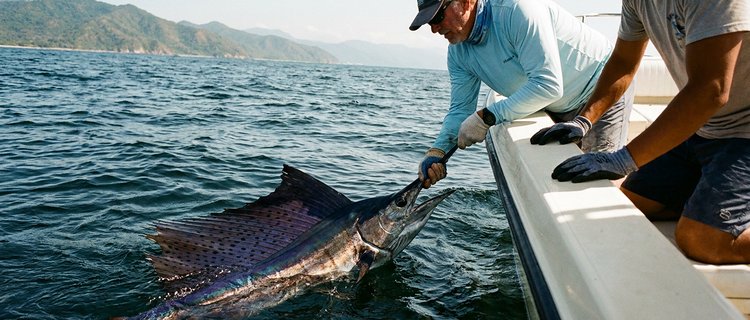
The official norm (NOM-017-PESC-1994) reserves marlin, sailfish, swordfish, dorado, roosterfish, and tarpon for sportfishing within fifty nautical miles of the coast. The daily limit is ten fish per angler with no more than five of one species, and the big ones count heavily: one marlin, sailfish, swordfish, or shark per day counts as five fish, and dorado and roosterfish are limited to two, each counting as five. Anything over the limit goes back alive, one rod per angler, no filleting on board. In practice the Puerto Vallarta fleet releases billfish as a matter of pride; the photo at the boat is the trophy.
Vacation rental, tax, condominium, and immigration rules in Jalisco and Nayarit are subject to change. This article reflects the requirements as verified in October 2026. Confirm current rules with a licensed professional, or ask the Naya Homes team, before relying on them.
What the day actually looks like
Inshore trips leave around seven and are back for a late lunch. Offshore boats leave between five and six, sometimes earlier, because the banks are hours away and the bite is best at first light. The crew rigs bait while you drink coffee; your job is to stay out of the way until a reel screams.
- Take motion-sickness medication the night before and again at breakfast if you are prone to it. The bay is calm; the open Pacific is not always.
- Bring reef-safe sunscreen, a hat with a strap, polarized sunglasses, a light long-sleeve shirt, and soft-soled shoes.
- Pack more water than you think you need, plus snacks; ask whether lunch is on board.
- Bring a dry bag for your phone and a few hundred pesos in cash for the crew tip and the dock.
- Decide the catch plan before you leave the dock: what you keep, what you release, and who cleans it.
At the dock the crew weighs and photographs anything you kept, fillets it, and bags it on ice. Stand close to the fish for the picture; it always looks bigger that way, and everyone knows it.
Cook your catch
The best part of a fishing day happens at dinner. Several marina and Zona Romántica restaurants will cook your dorado, tuna, or snapper the way you ask, usually zarandeado over the grill, al mojo de ajo, or as sashimi, for a modest per-kilo kitchen fee. Call the same afternoon, give them the species and weight, and bring the bagged fillets straight from the boat. For a table that knows fresh fish, start with our top Puerto Vallarta restaurants.
The other option is the one hotels cannot offer: cook it at home. A Naya Homes kitchen is inventoried before you arrive, so a grill pan, lime, salt, and a cold cerveza are the whole recipe. Dorado tacos on the terrace with the bay going pink is a very good way to end the day.
Beyond the charter: piers, surf, and the November tournament
You do not need a boat to fish here. Locals cast from rocky points and river mouths around the bay, surf fishing is popular on the long Riviera Nayarit beaches north of Bucerías, and the Marina Vallarta boardwalk is the place to watch the fleet come in. Casting from the Los Muertos pier itself is discouraged and may be restricted, so use the beach and the rocks south of it.
The bay's signature event is the Puerto Vallarta International Fishing Tournament, run by the Club de Pesca de Puerto Vallarta since 1956 and now in its seventieth edition. The 2026 tournament runs November 11 to 14, with marlin and yellowfin tuna as the headline categories and cash prizes topping a million pesos. Even if you are not competing, the weigh-ins on the Marina Vallarta malecón are a spectacle. Marina rentals book early that week, so fold a tournament trip into your Puerto Vallarta itinerary well ahead.
Whale season overlaps the winter fishing months, so a December to March run to the banks often comes with humpbacks breaching on the way out; our whale watching guide covers the season. For everything else on the water and off it, start with our things to do in Puerto Vallarta and Riviera Nayarit hub.
The bay rewards the people who ask good questions
Fishing here is less about luck than people think. The captains who fish Banderas Bay every week know where the water warmed overnight, which bank held bait yesterday, and when the afternoon wind will turn the ride home bumpy. Your job is to pick the right kind of day for your group, ask the three questions, and get to the dock on time. The bay does the rest more often than not.
Base yourself near the water and the whole thing gets easier. A condo in Marina Vallarta puts the charter docks, the tournament weigh-ins, and the boardwalk restaurants within a short walk, and a stay north of the bay in Nuevo Nayarit or La Cruz shortens the run toward the Marietas. Either way, you come home with fish in the bag, salt on your skin, and a dinner plan already made.
Walk to the dock from a Naya Homes rental
Stay in a Naya condo in Marina Vallarta or Nuevo Nayarit and walk to the dock; our local team can line up a vetted captain, tell you what has been biting this week, and point you to the restaurant that will cook your catch tonight.
Browse Naya Homes rentalsFrequently asked questions
What is the best month for marlin in Puerto Vallarta?
Blue and black marlin peak in the warm-water months, roughly July through October, on the offshore banks at La Corbeteña and El Banco, with a secondary push into November around the tournament. Striped marlin show up in the cooler water of December through February. Sailfish are present most of the year with their strongest showing from late summer through fall. Captains read the water daily, so ask what has been caught this week, not this month.
Do I need a fishing license in Mexico?
Yes. Mexico requires an individual sportfishing permit from CONAPESCA for anyone fishing from a boat, sold by the day, week, month, or year, and the long-standing guidance is that everyone on board a boat that is fishing carries one. Established Puerto Vallarta charters include permits in the price; confirm it when you book. Fishing from shore does not require a permit but follows the same limits. Vacation rental, tax, condominium, and immigration rules in Jalisco and Nayarit are subject to change; this answer reflects the rules as verified in October 2026, so confirm with a licensed professional or the Naya Homes team.
How much does a fishing charter cost in Puerto Vallarta?
It depends on the boat and the hours. A seat on a shared panga runs well under a hundred US dollars, a private panga half-day inside the bay sits in the low hundreds, a cruiser for a full day runs several hundred to around a thousand, and a large sportfisher on a twelve-hour offshore run is well into four figures. Fuel, bait, tackle, and licenses are usually included; lunch, drinks, and a fifteen to twenty percent crew tip usually are not.
Can beginners go deep-sea fishing?
Absolutely, and the crew expects it. The mate rigs the bait, sets the lines, and hands you the rod once a fish is hooked, then coaches you through the fight. If anyone in the group gets seasick or is under ten, start with a half-day inside the bay, where the water is calm and roosterfish and jacks keep rods bending. Save the long offshore run for a second trip.
Where do fishing boats leave from in Puerto Vallarta?
Marina Vallarta is the main charter port, ten minutes from the airport, with most cruisers and sportfishers docked there. Marina Nuevo Vallarta and Marina Riviera Nayarit in La Cruz de Huanacaxtle serve the north side of the bay, Punta de Mita launches pangas toward the Marietas, and pangas can be arranged from the beach beside the Los Muertos pier in Zona Romántica for inshore mornings on the south shore.
Can a restaurant cook my catch?
Yes. Several restaurants in Marina Vallarta and Zona Romántica will prepare your dorado, tuna, or snapper for a modest per-kilo kitchen fee, typically grilled zarandeado style, al mojo de ajo, or as sashimi. Call the same afternoon, tell them the species and weight, and bring the bagged fillets from the boat. Or cook it yourself: every Naya Homes kitchen is inventoried before you arrive.