

Whale Watching in Banderas Bay: The Complete December-to-March Guide
Every winter, hundreds of humpback whales swim thousands of miles to spend the season in the warm, sheltered waters of Banderas Bay, and for a few months Puerto Vallarta becomes one of the best places on earth to watch them. From December to March you can head out on a morning boat and see mothers nursing newborn calves, males breaching and slapping the surface, and, through a hydrophone, hear them sing. This is the complete guide to when to go, what you will see, how to pick an operator that treats the whales right, and where to depart, whether you are staying in town or up the coast in Nuevo Vallarta, Bucerias, or Punta de Mita.
The short answer
Humpback whale watching in Banderas Bay runs from about December 1 to March 23, peaking in January and February. The bay is a premier nursery because whales migrate roughly 5,000 kilometers from the north to calve in its warm, protected waters. Expect breaching, tail slaps, and mothers with calves. Choose an operator flying the SEMARNAT whale-watching flag with a marine-biologist guide and small groups, go on a calm morning departure, and pick a departure point near your stay. The month-by-month guide below shows what each month brings and which tour style fits the way you travel.
Why Banderas Bay is a premier humpback nursery
Banderas Bay is one of the largest and deepest bays in Mexico, and that geography is exactly what makes it a world-class place to see whales. Each year, several hundred humpback whales migrate roughly 5,000 kilometers from their cold northern feeding grounds in the North Pacific to the bay's warm, calm, protected waters, where they mate and, crucially, give birth. The bay works as a natural nursery: newborn calves are born without much blubber, so the warm shallows help them survive their first weeks, and the sheltered water gives mothers a safe place to nurse and teach them before the long journey back north. That is why a Banderas Bay trip so often includes the sight of a mother and calf together, something you simply do not get on feeding-ground tours farther north. It is also why the season is tightly protected, since this is the whales' most vulnerable time.
The season month by month
The season has a clear arc, from the first December arrivals to the tapering close in late March. Here is the sighting outlook and the behaviors to expect in each month, followed by a quick guide to the tour style that fits how you like to travel.
December: building. The first arrivals, with spouts and distant sightings. Whales arrive from the north and numbers climb through the month, so early trips can be quieter but still rewarding, and the boats are less crowded.
January: excellent. Breaching, tail slaps, and mothers with calves. The bay fills and sightings become reliable, with active surface behavior on most trips.
February: peak. Breaching, pectoral slaps, singing males, and calves everywhere. This is the heart of the season, with the most whales and the most dramatic action of the year.
March: very good, tapering. Playful calves, breaching, and mothers with calves. Calves are strong and playful early in the month, and numbers taper toward the season's close around March 23.
Treat this outlook as a general seasonal guide based on typical patterns, not a guarantee; sightings vary day to day. The official season runs about December 1 to March 23, and only certified operators flying the SEMARNAT whale-watching flag are permitted to run tours.
Which tour style fits you?
Three kinds of boat cover almost every whale trip on the bay, and the right one comes down to two things: whether you want a small, personal group or a bigger, more social one, and whether your top priority is getting close, keeping the family comfortable, or coming home with great photos.
Small eco boat (small group, close encounters). A panga or Zodiac with a marine-biologist guide and often a hydrophone. Small groups and a low deck put you close to the action, within the legal distance, and this is the trip for anyone who wants to learn as much as they watch. It can be bumpier in chop, so it is not the pick for anyone prone to seasickness.
Family catamaran (bigger group, comfort). A larger, stable boat with shade, restrooms, and snacks. It is the steadiest, most social ride and the easiest choice for kids and mixed-age groups. If you are traveling with children, it pairs well with one of the family-friendly rentals in Puerto Vallarta so the whole trip runs at the same easy pace.
Photography-focused charter (small group, best photos). A small-group or private charter with flexible positioning and more time on each whale, built around getting the shot with a knowledgeable captain. Expect to pay more for the flexibility, and bring a long lens and a strap.
If you are staying with Naya Homes and want a second opinion before you book, our team is available for local assistance during your stay and can point you toward operators that hold the permit.
What you will see: humpback behaviors
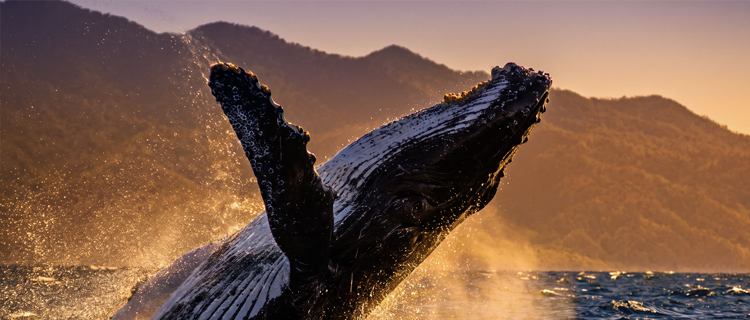
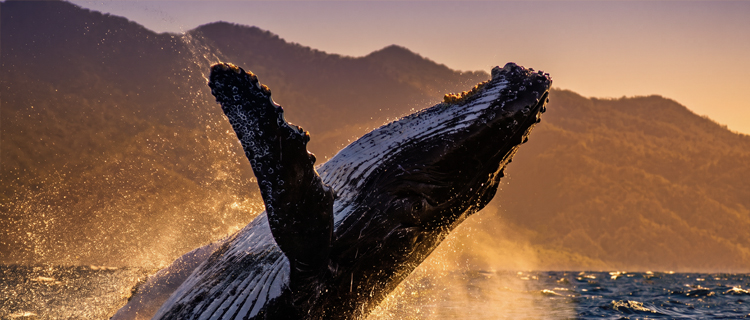
Humpbacks are the showmen of the whale world, which is a big part of why watching them is so thrilling. The headline act is breaching, when a whale throws most of its enormous body clear of the water and crashes back down in a wall of spray. You will also likely see tail slaps and pectoral-fin slaps, where a whale repeatedly smacks the surface with its flukes or long fins, and spy-hopping, when one rises vertically to poke its head above the water and look around. The most tender sightings are the mothers and calves, the little ones surfacing to breathe beside their mothers and practicing the moves they will need. And beneath it all is the sound: males sing long, complex songs that can last twenty minutes, and small-boat tours that carry a hydrophone let you listen in live, which for many people is the most unforgettable part of the trip.
How to choose an ethical operator
Because whale watching happens during the animals' most sensitive time, choosing a responsible operator is not just an ethical nicety, it is the law, and it makes for a better trip too. The first thing to look for is the annual whale-watching flag issued by SEMARNAT, Mexico's environmental authority; a certified operator is required to fly it, and it means the crew has been trained and vetted. Beyond the permit, the best operators keep groups small and put a marine biologist or trained naturalist on board who can read the whales' behavior and explain what you are seeing.
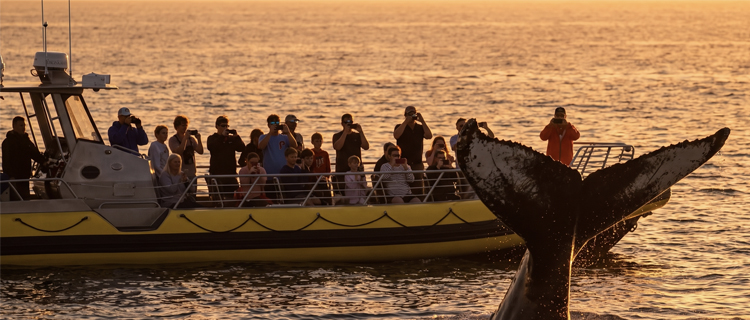
Responsible operators also follow the rules that keep the whales safe, and you can watch for them yourself. Boats must keep a minimum distance from the whales, about 60 meters for small boats and 80 meters for larger ones, with a 240-meter waiting distance, and no more than four boats may approach a whale or group at a time, for no longer than about 30 minutes. A good captain lets the whales set the terms, cutting the engine and letting curious animals approach rather than chasing them. If a boat is speeding after whales or crowding other vessels, that is a red flag, and it is worth choosing a different operator next time.
When and where to go
Timing your trip well makes a real difference. Aim for a morning departure, often around 8:30 am, because the sea is calmest early, which means a smoother ride, less seasickness, and whales that are typically more active. The peak months of January and February give you the best odds, though a December or March trip can be wonderful and quieter. March is also simply a lovely time to be here, which is one reason it is worth reading up on whether March is a good time to visit Puerto Vallarta if you are planning around the tail of the season.
Where you leave from depends on where you are staying. In Puerto Vallarta proper, tours depart from Marina Vallarta and the Los Muertos Pier in the Zona Romantica, the same neighborhood as Naya Homes' Puerto Vallarta office. If you are staying north in Nuevo Vallarta (now officially Nuevo Nayarit, which is how it appears in our rental search) or elsewhere on the Riviera Nayarit, look for departures from the Nuevo Vallarta marina or La Cruz de Huanacaxtle so you are not crossing town at dawn, and there are smaller-group options from the south shore too. Naya Homes manages vacation rentals from the Zona Romantica up through Nuevo Vallarta, Bucerias, La Cruz de Huanacaxtle, and Punta de Mita, so wherever you base yourself, a departure point is close by. Many trips run three to four hours, and some operators pair the morning with a snorkeling stop at the Los Arcos sea arches off Mismaloya, one of the bay's best snorkel sites, which we cover in our guide to Banderas Bay beaches by how you reach them. Whale watching is one of the headline outings in our roundup of the best tours and activities in Puerto Vallarta, and in season it is the one not to miss.
Frequently asked questions
When is whale watching season in Puerto Vallarta?
The official humpback whale watching season in Banderas Bay runs from about December 1 to March 23, the window set and enforced by Mexico's environmental authority, SEMARNAT. Numbers build through December as whales arrive from the north, peak in January and February when the bay is fullest and the surface behavior is most dramatic, and taper through March, when the calves are strong and playful before the season closes.
How likely am I to see whales, and is it guaranteed?
During the January and February peak, sightings are highly reliable, and many reputable operators report seeing whales on the large majority of trips. That said, these are wild animals, so nothing is guaranteed on any single outing. You improve your odds by going in the peak months, choosing a morning departure when the water is calm and whales are active, and picking an experienced, licensed operator that knows where to look.
What whale behaviors will I see?
Humpbacks are among the most active whales to watch. You may see breaching, where a whale launches most of its body out of the water, along with tail slaps and pectoral-fin slaps on the surface, spy-hopping where they lift their heads to look around, and, most movingly, mothers swimming alongside their new calves. Many small-boat tours also carry a hydrophone so you can listen to the long, complex songs the males sing underwater.
How do I choose an ethical and legal whale watching operator?
Look for the annual SEMARNAT whale-watching flag on the boat, which shows the operator is certified and trained. Beyond the permit, the best operators run small groups with a marine-biologist or naturalist guide, and they respect the rules that protect the whales: keeping a minimum distance of 60 meters for small boats and 80 meters for larger ones, a 240-meter waiting distance, no more than four boats near a whale at once, and a 30-minute limit per encounter. Avoid any operator that chases whales or crowds them.
Where do tours depart, and which is best if I am staying in Nuevo Vallarta?
In Puerto Vallarta proper, tours leave from Marina Vallarta and the Los Muertos Pier in the Zona Romantica. If you are staying north, in Nuevo Vallarta or Riviera Nayarit, look for departures from the Nuevo Vallarta marina or La Cruz de Huanacaxtle, which save you a cross-town trip. There are also smaller-group options from the south shore. The simplest rule is to pick the departure point closest to where you are staying.
What should I bring, and what is the best time of day to go?
Morning departures, often around 8:30 am, are best, because the sea is calmest then, which means a smoother ride and less chance of seasickness. Bring a light layer or windbreaker for the breezy start, a hat and sunglasses with a strap, reef-safe sunscreen, water, and a camera or phone with a secure strap. Binoculars help, and if you are prone to motion sickness, take a remedy before you board rather than once you are out on the water.
Can I combine whale watching with snorkeling at Los Arcos?
Yes, some operators pair a morning of whale watching with a snorkeling stop at the protected Los Arcos sea arches off Mismaloya on the way back, which makes for a full and varied day on the water. Not every whale tour includes it, so confirm when you book, or simply do the two as separate outings. Either way, Los Arcos is one of the bay's best snorkeling spots and an easy add to a whale-season trip.
Plan a winter stay on the bay
Whale season is one of the best times to be in Puerto Vallarta, with warm, dry days and the bay full of humpbacks. Base yourself near the water and the marinas so a morning trip is easy to build into your week. Browse Naya Homes vacation rentals for your winter stay, see why booking direct is the smartest way to plan a Puerto Vallarta trip, check the current direct-booking specials, or explore the wider Puerto Vallarta area to plan your week around the whales.
Find your winter rental on the bay