
Snorkeling and Diving in Banderas Bay: Los Arcos, Marietas, and Majahuitas
Banderas Bay hides a whole second world below the surface. Granite arches riddled with caves and tunnels, an offshore island biosphere, quiet reef coves reachable only by boat, and, in winter, the sound of humpback whales singing through the water while you swim. This guide covers the three headline sites for snorkeling and diving, Los Arcos, the Marietas Islands, and Majahuitas, plus a shore-snorkel option that needs no boat, and the honest practical details on gear, tides, seasons, and what the visibility is really like. This is a nutrient-rich Pacific bay, not the Caribbean, and knowing that going in is the difference between a great day and a disappointed one.
The short answer
The best snorkeling and diving near Puerto Vallarta centers on three sites. Los Arcos Marine National Park, off Mismaloya, is the headliner, with arches, caves, and reef for snorkelers and a dramatic wall for advanced divers. The Marietas Islands offer protected-biosphere snorkeling off Punta de Mita. And Majahuitas is a calm, boat-only reef cove. For a no-boat option, snorkel the rocky coves of Conchas Chinas at low tide. In winter you can often hear humpback song underwater. Visibility is best on calm mornings, wear reef-safe sunscreen, and expect a real Pacific bay rather than gin-clear water.
Los Arcos Marine National Park
Los Arcos is the crown jewel of snorkeling around Puerto Vallarta, a cluster of granite islets rising out of the bay about 12 kilometers south of town, just off Mismaloya. Protected since the 1970s and made a national marine park in 1984, it is a genuine reserve, which is why the marine life is so rich. The rocks are carved with dramatic arches, sea caves, and underwater tunnels you can swim, kayak, or even motor through, and the water around them is shallow and sheltered near the islets before dropping off steeply into the deep.
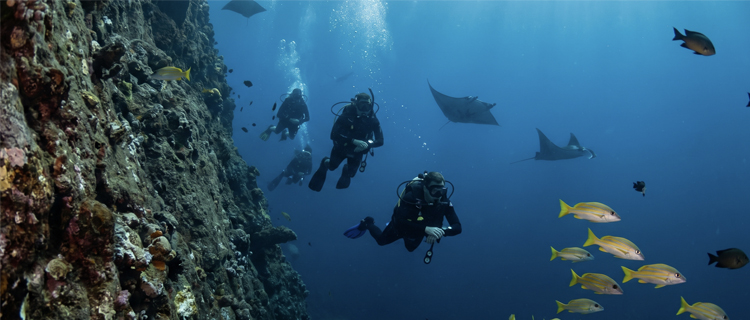
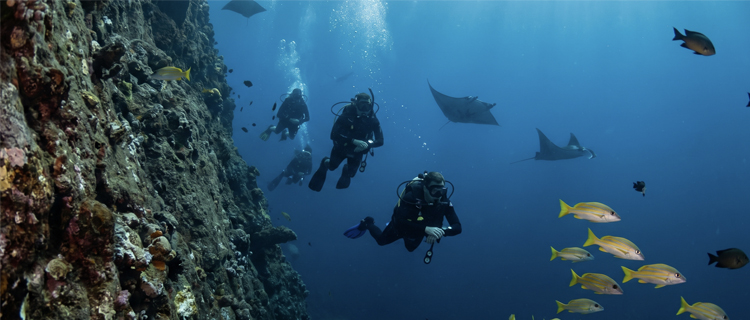
For snorkelers, this is the sweet spot. In the shallows near the rocks, roughly 30 feet and less, you drift over king angelfish, sergeant majors, pufferfish, and parrotfish, with moray eels tucked into crevices, octopus changing color on the rock, and sea turtles and eagle rays passing through. Overhead, the islets are alive with seabirds. For certified divers, Los Arcos delivers a second act: the shallow reef and arches are beginner-friendly, while the western side falls away in a sheer wall, and the nearby deep sites known as El Bajo and Devil's Canyon plunge into the deepest part of the entire bay, well past what recreational limits allow. Those deep sites are for advanced divers only, and they are where you find the bigger animals, giant morays, manta rays, and the occasional seahorse.
As a protected park, the rules are simple and firm: no fishing, no taking anything, not a shell or a rock, and no touching or disturbing the coral, the wildlife, or the birds. Los Arcos is reachable only by water, most easily by a 5 to 10 minute panga ride from Mismaloya, by water taxi from Boca de Tomatlan, or on a guided tour from the Los Muertos Pier. Swimming out from shore is not advised because of currents and boat traffic.
The Marietas Islands
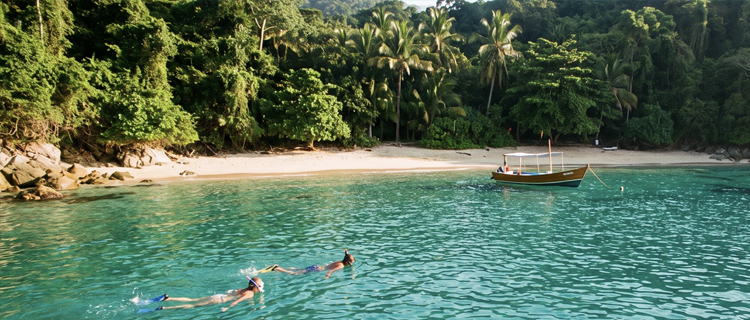
Out at the northwestern mouth of the bay, off Punta de Mita, the Marietas Islands are a protected biosphere reserve and one of the most rewarding snorkel sites in the region. The clear, sheltered water around the islands holds well over a hundred species of tropical fish along with sea turtles, octopus, and manta and eagle rays, and the cliffs above are a rare nesting colony of blue-footed boobies, so the wildlife is spectacular above and below the surface. The islands are most famous for the Hidden Beach, tucked inside a collapsed crater, but access to that beach is tightly limited by permit, cap, and a real open-water swim. Because the rules are strict and specific, we cover them in full in our dedicated guide to the Islas Marietas and the Hidden Beach. For snorkeling, the key point is that the standard Marietas tour, with its reef and its birds, is superb on its own, whether or not you make it into the Hidden Beach.
Majahuitas
For a quieter underwater day, Majahuitas is the pick. It is a small, boat-only cove on the bay's wild south shore, near Quimixto and Las Animas, and because it is not a formal reserve it sees far fewer visitors than Los Arcos, so you may have the reef largely to yourself. The water is calm and protected, the reef sits at a gentle, snorkel-friendly depth, and the residents include sea turtles, stingrays, spotted eagle rays, and clouds of tropical fish. Dolphins often escort the boats on the way there. You reach it by water taxi from Boca de Tomatlan or Mismaloya, or as part of a south-shore tour, and it pairs naturally with a beach day.
Conchas Chinas and the winter whale-song bonus
Not every snorkel needs a boat. Just south of the Zona Romantica, the rocky coves of Conchas Chinas are the best shore-based option in town, a series of natural rock pools and sheltered pockets where you can wade in and snorkel over crabs, small tropical fish, anemones, and mollusks. The catch is in the timing and the footing: it is a rocky, tide-pool spot rather than a reef, so go at low tide when the pools are calm and accessible, and wear water shoes. Visibility is modest and variable, but for a free, no-boat swim a short walk or bus ride from downtown, it is a lovely way to spend a morning.
Then there is the winter bonus that no other season offers. From roughly December through March, humpback whales fill Banderas Bay to breed, and the males sing. If you are snorkeling or diving anywhere in the bay while they are around, you can often hear that haunting song carrying through the water, a sound you feel as much as hear. Divers experience it most clearly, submerged and still, and it turns an ordinary dive into something people remember for life. Our full guide to whale watching in Banderas Bay covers the season in depth.
Planning your underwater day: gear, tides, and honest visibility
A little planning makes all the difference underwater. You can go the do-it-yourself route, taking a bus to Mismaloya and hiring a panga to Los Arcos with your own mask and fins, or join a guided snorkel or dive tour that handles the boat, the gear, and the guiding; the boat-only sites like Los Arcos, Majahuitas, and the Marietas really do need a boat, while Conchas Chinas is the shore option. Puerto Vallarta has plenty of PADI dive shops for everyone from first-timers doing a Discover Scuba session to certified divers heading for the deep wall.
On gear and comfort, let the season guide you. In the cool, dry winter months the water sits in the mid-60s to mid-70s Fahrenheit, so a 3 to 5 millimeter wetsuit is worth it, while the warm season, from about June through October, runs into the low-to-mid 80s and needs little more than a swimsuit or a shorty. Wear only reef-safe, biodegradable sunscreen, applied well before you get in, or skip it in favor of a rash guard; it is strongly encouraged everywhere and strictly required at the Marietas park, where regular sunscreen is banned at the entrance.
Finally, an honest word on visibility, because managing expectations is the whole game here. Banderas Bay is a living, nutrient-rich Pacific bay, not a Caribbean lagoon, so it is rarely crystal clear, and clarity genuinely swings with conditions rather than following one simple rule. On the calmest, best days you might get 60 feet or more of visibility, occasionally over 100; on off days it can drop to 15 to 50 feet. Winter delivers the calmest seas and the biggest marine life but cooler, sometimes greener plankton-rich water, while the warm season can be beautifully clear except right after heavy rain, when runoff clouds the water near shore and the river mouths. The reliable constant is the morning: go early, when the water is calmest and the light is best, and you give yourself the finest conditions the bay has to offer that day.
Frequently asked questions
Where is the best snorkeling near Puerto Vallarta?
The headline site is Los Arcos Marine National Park, the protected cluster of granite arches off Mismaloya, with sea caves, tunnels, and abundant fish just a short boat hop from town. Beyond it, the Marietas Islands offer world-class snorkeling around a protected biosphere off Punta de Mita, and the quiet, boat-only cove of Majahuitas has a calm reef with turtles and rays. For a snorkel you can reach without a boat, the rocky coves of Conchas Chinas, just south of the Zona Romantica, work well at low tide.
Can I snorkel Los Arcos on my own, or do I need a tour?
Los Arcos is reachable only by water, so you either join a guided snorkel tour or do it yourself by taking the Mismaloya or Boca bus and hiring a panga water taxi for the short ride out, roughly 5 to 10 minutes from Mismaloya. If you go independently, bring your own mask and fins, since rentals are limited at the launch points. Swimming out from shore is not recommended because of the currents and boat traffic, so plan on a boat either way.
Can I scuba dive at Los Arcos, and do I need to be certified?
Yes. Los Arcos suits both new and experienced divers. The shallow reef and arches are beginner-friendly and are often done as a Discover Scuba intro, while the western wall and the deep sites nearby, known as El Bajo and Devil's Canyon, drop off dramatically into the deepest part of the bay and are for advanced certified divers only. Puerto Vallarta has plenty of PADI dive shops offering everything from a first try-dive to full Open Water and Advanced certification.
What is the water temperature, and do I need a wetsuit?
It swings with the season. In the dry winter months, roughly December through May, the water runs about 65 to 75 degrees Fahrenheit and is coolest from January to April, so a 3 to 5 millimeter wetsuit makes a snorkel or dive much more comfortable. In the warm season, roughly June through October, the water climbs to the low-to-mid 80s, and a shorty wetsuit or just a swimsuit is plenty. Dive shops provide wetsuits with their trips.
What is the honest visibility, and when is it best?
Banderas Bay is a nutrient-rich Pacific bay, not the Caribbean, so set expectations accordingly: it is rarely gin-clear, and realistic visibility runs from around 15 to 50 feet on off days up to 60 feet or more, occasionally over 100, on the best calm days. The trade-offs are real. Winter brings the calmest seas and the biggest marine life but cooler, sometimes greener plankton-rich water, while the warm season can be strikingly clear except right after heavy rain, when river runoff clouds the nearshore water. Whatever the season, mornings are calmest and clearest.
Can you really hear whales underwater?
Yes, and it is unforgettable. During humpback season, roughly December through March and peaking in January and February, the males sing long, complex songs, and if you are snorkeling or diving in the bay while they are around, you can often hear that song carrying through the water. Divers experience it most reliably because they are fully submerged and quiet, and many whale and snorkel tours also carry a hydrophone so everyone can listen in live.
What should I bring, and are there sunscreen rules?
Bring or rent a mask, snorkel, and fins, add water shoes if you plan to snorkel the rocky coves at Conchas Chinas, and go in the morning for the calmest, clearest water. On sunscreen, use only reef-safe, biodegradable products and apply them at least 20 minutes before you get in; it is strongly encouraged everywhere here and is strictly enforced at the Marietas national park, where regular sunscreen is banned. Better still, wear a rash guard so you barely need any. And never touch or take the coral or wildlife in the protected parks.
Base yourself near the boats
The best underwater days start early and close to the water, whether that is near the Los Muertos Pier and the south-shore launches or up toward Punta de Mita for the Marietas. Browse Naya Homes vacation rentals across the bay, or explore the wider Puerto Vallarta area to plan your trip.
Find your Puerto Vallarta rental