
Islas Marietas and the Hidden Beach: Permits, Tours, and How to Actually Get In
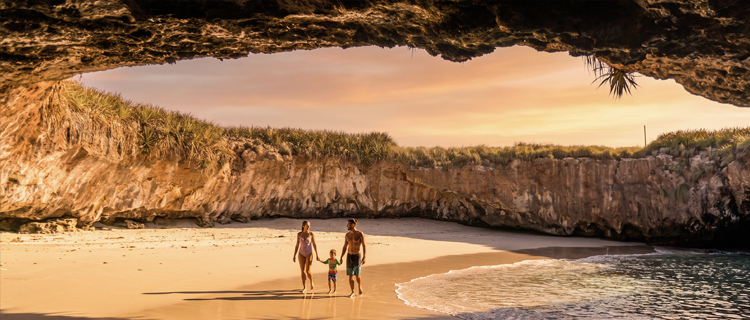
The Hidden Beach on the Islas Marietas is one of the most photographed places in Mexico: a perfect circle of sand and turquoise water tucked inside a volcanic island, open to the sky through a hole in the rock and reachable only by swimming through a tunnel from the open ocean. It is also one of the most misunderstood, because getting in is genuinely limited and not guaranteed. This guide gives you the honest version: what the Hidden Beach really is, why access is capped, whether you can actually make the swim, how to book the right tour, and why the standard island tour is worth every peso even on the days you never set foot on that famous sand.
The short answer
The Hidden Beach (Playa del Amor) sits inside Isla Redonda in the protected Islas Marietas National Park, off Punta de Mita. Access is capped at about 116 visitors a day in small timed groups, the beach is closed Mondays and Tuesdays, and you can only go with a licensed CONANP-permit operator, never a private boat. Reaching it means a real open-water swim through a low rock tunnel at low tide, in a mandatory life jacket and helmet, so you must be a confident swimmer. Book a permit-holding operator days ahead, and know that even without Hidden Beach entry, the island tour, with blue-footed boobies, snorkeling, and winter whales, is spectacular.
What the Hidden Beach actually is
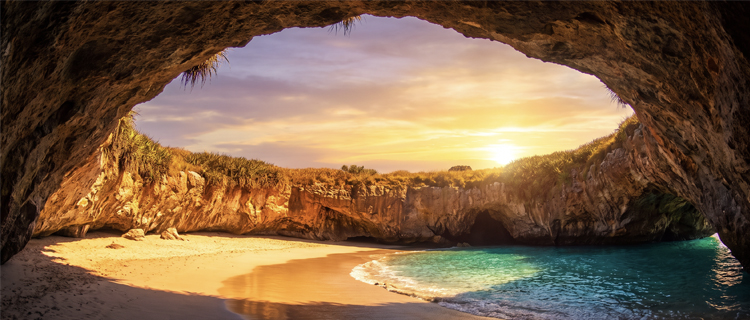
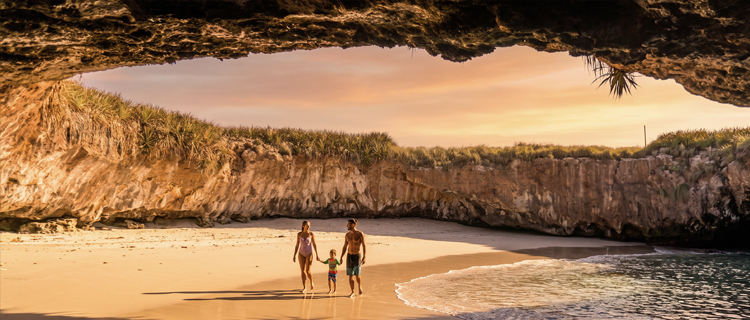
The Hidden Beach is a sunken crater beach inside Isla Redonda, one of the two main Islas Marietas. Picture a sea cave whose roof collapsed, leaving a roughly circular pocket of golden sand and shallow, glowing water open to the sky through a hole overhead, completely invisible from the outside. Because the collapsed opening is above, the only way in at water level is through a short rock tunnel that connects the interior lagoon to the open Pacific. Boats cannot enter; they anchor outside, and visitors swim in.
The popular story, and the one every guide tells, is that the uninhabited islands were used by the Mexican military for target practice and bombing tests in the early 1900s, and that a blast, helped along by years of wave erosion, collapsed the cavern roof to create the beach. Geologists will tell you the islands themselves are volcanic and that erosion did much of the quiet work over a very long time, but the bombing tale is the origin myth the place is famous for. However it formed, the effect is unforgettable: a private, sunlit beach hidden inside an island, which is exactly why it draws the crowds that made the strict rules necessary.
Why access is so limited
The Islas Marietas are a national park and UNESCO-recognized biosphere reserve, protected for their coral, their fish, and above all their seabird colonies. For years the Hidden Beach was loved almost to death: at peak times, well over a thousand visitors a day were swimming in, standing on the coral, and stressing the ecosystem. In 2016 the authorities closed the beach entirely for several months to let the reef recover, and it reopened under the strict, capped system that still governs it today. Understanding that system is the key to a successful visit.
That last point matters more than people expect. Even with a confirmed booking, the tunnel swim can be called off on the morning of your tour if the tide is wrong or the sea is rough, since the passage has very little headroom and a surge can push swimmers into the rock. Access is never guaranteed on any single day, which is the biggest reason to set your expectations early and to build in a buffer day if the Hidden Beach is a must-do.
The honest requirements: can you actually get in?
Here is where an honest guide earns its keep, because the Hidden Beach is not for everyone, and there is no shame in that. To reach it, you swim from the boat, across open water and then through the low rock tunnel into the crater. The tunnel itself runs roughly 20 to 30 meters, and the total swim from the panga is longer, sometimes against a current. You must be a confident open-water swimmer who is comfortable in moving water and in a tight space with limited headroom.
The safety rules are strict and non-negotiable. A life jacket and a helmet are mandatory for the swim, a wristband tracks your place in the daily count, and fins, masks, and snorkels are not allowed in the tunnel, both to protect the reef and to keep swimmers from kicking each other in the confined passage. The swim is only possible at low tide, most operators set a minimum age of around 12, and some set an upper age limit as well. If you are not a strong swimmer, the life jacket helps but does not change the honest answer: this is a real swim in the open ocean, and it is better to know that now than at the mouth of the tunnel. The good news, which we will come back to, is that the rest of the tour is genuinely spectacular whether or not you make the swim.
How to book the right tour
Booking Marietas is not like booking a generic boat trip, and the single most common mistake is assuming any Marietas tour includes the Hidden Beach. It does not. Only a small pool of operators hold the CONANP permit that allows Hidden Beach access, so you must book specifically with one of them, and confirm that Hidden Beach entry is included, weather and tide permitting. A plain island-and-snorkel tour will show you the Marietas beautifully but will not take you through the tunnel.
Beyond the permit, look for an operator that runs small groups and puts trained guides, ideally naturalists or marine biologists, on the boat, both for safety and because they make the wildlife come alive. Because the daily cap is so low, Hidden Beach spots sell out, especially in the winter high season and around Easter, so reserve days to a couple of weeks ahead rather than hoping to book last minute. Finally, ask about the operator's policy if the swim is cancelled for weather, since a good one will offer a rebook or partial refund, and plan a flexible day or two around your tour in case the sea does not cooperate.
What the tour includes even without the Hidden Beach
This is the part that turns a potentially disappointing day into a great one, so it is worth saying clearly: the standard Islas Marietas tour is one of the best days out on the whole bay, entirely apart from the Hidden Beach, and a headline entry in our roundup of the best tours and activities in Puerto Vallarta. The islands are one of the only blue-footed booby nesting colonies in Mexico and the most southerly nesting site of the species in North America, so you cruise past cliffs alive with these comical, bright-footed birds, along with brown boobies and dozens of other species; winter brings the greatest numbers and the nesting drama.
The snorkeling is the other headline. The protected waters around the islands hold well over a hundred species of tropical fish, along with sea turtles, octopus, moray eels, and manta and eagle rays gliding over the coral, and the visibility is often superb. There is also a second, open beach, Playa la Nopalera, sometimes called the other beach, that anyone can reach with no tunnel swim, ideal for a relaxed sand-and-snorkel stop. Dolphins frequently escort the boats on the crossing, and in winter, roughly December through March, humpback whales fill these waters, so many operators combine the trip with whale watching; our full guide to whale watching in Banderas Bay covers that season in depth. Add paddleboarding or kayaking in the calm perimeter coves, and the day stands on its own.
Getting there: departures and crossing times
The Marietas sit off Punta de Mita, at the northwestern tip of Banderas Bay, so where you leave from makes a real difference to how much of your day is spent on the water. The closest launch by far is Punta de Mita itself, only about 15 to 25 minutes away, which makes it the natural choice for guests staying in the Riviera Nayarit or the north end of the bay. La Cruz de Huanacaxtle is roughly 30 to 45 minutes out, and Sayulita about an hour.
From the Puerto Vallarta side, tours leave from the marina and the Nuevo Vallarta area, but the crossing is the longest, anywhere from about 45 minutes to well over an hour depending on whether you are on a fast boat or a larger vessel. None of this is a problem, and many excellent tours run from Puerto Vallarta, but if the Marietas are your priority and you have a choice of where to stay, a base in the Riviera Nayarit near Punta de Mita buys you shorter crossings, calmer morning seas, and more time at the islands. Whichever side you are on, morning departures are best, since the water is calmest early and the light on the islands is at its finest.
Visiting responsibly
The only reason the Hidden Beach and the islands are still worth visiting is that the rules brought them back from the brink, so honoring them is part of the deal. Do not touch or stand on the coral, and do not touch, feed, or chase the wildlife, the fish, the turtles, or above all the birds, which are the whole point of the reserve. Sunscreen is tightly restricted: expect a no-sunscreen policy at the Hidden Beach itself, use only reef-safe, biodegradable products elsewhere, and better still, wear a rash guard and a hat so you barely need it. Leave the shells, sand, and rocks where they are, keep to your group and your time limit, and skip the drone, since they disturb the nesting colonies. Follow the guide, respect the cap, and you help make sure the islands are still here, and still open, for the next traveler.
Frequently asked questions
Is the Hidden Beach at Islas Marietas open?
Yes. The Hidden Beach, also called Playa del Amor or Playa Escondida, is currently open to visitors under a strict, capped access system, generally Wednesday through Sunday. You may see an outdated listing online tagging it as permanently closed, which is a data error, not reality; tours run regularly. The one real caveat is weather and tide: the tunnel swim is often called off day-of when swells are high or the tide is not low enough, so access is never guaranteed on any given date.
How many people can visit the Hidden Beach each day?
Access is capped at about 116 visitors per day, admitted in small groups of roughly 15 on timed shifts, with a time limit of around 30 minutes counted from the moment you leave the boat. That leaves only 10 to 20 minutes on the sand. Because the cap is low and demand is high, Hidden Beach spots sell out, so book a permitted operator days to weeks ahead in high season.
Do I have to swim to reach the Hidden Beach, and how hard is it?
Yes, and this is the part to be honest with yourself about. No boat can enter, so you swim from the panga through a short, low-ceilinged rock tunnel into the crater, a passage of roughly 20 to 30 meters, plus more open water from the boat, sometimes against a current. You must be a confident open-water swimmer. A life jacket and helmet are mandatory, fins and snorkels are not allowed in the tunnel, and entry is only possible at low tide when there is enough headroom.
What days is the Hidden Beach closed?
Hidden Beach entry is unavailable on Mondays and Tuesdays, so plan your visit for Wednesday through Sunday, roughly 8 am to 6 pm. General island and snorkeling tours may still run on the closed days without beach access, but if the tunnel swim is your goal, avoid the start of the week. There is no fixed annual closure, though weather closes the tunnel swim unpredictably, especially in the summer rainy season.
Can I visit on my own or with any tour operator?
No. The Islas Marietas are a protected national park, and you can only enter the Hidden Beach with a licensed operator that holds a CONANP permit; private and independent boats are not allowed in. Just as important, a generic Marietas boat tour does not guarantee Hidden Beach entry. Book specifically with a permit-holding operator that advertises Hidden Beach access, ideally one with certified guides or marine biologists on board.
If I cannot get into the Hidden Beach, is the tour still worth it?
Absolutely, and this is worth saying plainly: the standard Marietas tour is spectacular on its own. The islands are one of the few blue-footed booby nesting colonies in Mexico, the snorkeling is among the best in the region with over a hundred fish species, sea turtles, and rays, and there is a second, open beach, Playa la Nopalera, that needs no tunnel swim. Add dolphins on the crossing and humpback whales in winter, and you have a great day whether or not the Hidden Beach works out.
Where do Marietas tours leave from, and which is closest?
Tours depart from several points around the bay. Punta de Mita is the closest, only about 15 to 25 minutes away by boat, which makes it the natural choice for guests staying in the Riviera Nayarit or the north bay. La Cruz de Huanacaxtle is roughly 30 to 45 minutes, Sayulita about an hour, and the Puerto Vallarta marina is the farthest, around 45 minutes to well over an hour depending on the boat. Closer departures mean more time at the islands and calmer mornings.
Can I wear sunscreen, and what are the rules for visiting responsibly?
The rules protect a fragile ecosystem, so follow them closely. Expect a no-sunscreen policy at the Hidden Beach itself, and use only reef-safe, biodegradable sunscreen elsewhere on the tour, or better, wear a rash guard and UV clothing. Do not touch or stand on the coral, do not touch, feed, or chase the wildlife or birds, keep to your group and your time limit, and leave shells, sand, and rocks where they are. Drones are not allowed, since they disturb the bird colonies.
Stay close to the launch
A Marietas morning is easiest when you are based near where the boats leave. The Riviera Nayarit near Punta de Mita puts you closest to the islands, while Puerto Vallarta keeps you central to the rest of the bay. Browse Naya Homes vacation rentals, or explore the Puerto Vallarta and Riviera Nayarit areas to plan your trip.
Find your Puerto Vallarta rental