

Cabo’s short-term rental market has faced notable challenges in 2024, with year-to-date revenue continuing to lag behind 2023. Overall, market income decreased by 22% compared to the same period last year, driven by rapid real estate expansion and a decline in tourist arrivals. Despite these hurdles, some signs of recovery are on the horizon as the market adjusts.
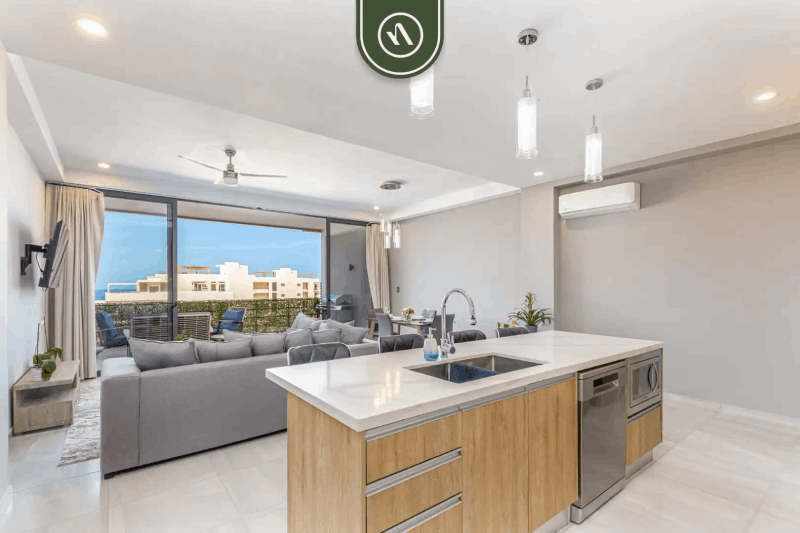
Condo at Torre Maria, a vacation rental by Naya Homes in Cabo
The Numbers: What’s Happening in Cabo?
In 2024, Cabo’s short-term rental market experienced a significant revenue decline, down 22% year-over-year. This decrease is primarily attributed to a surge in new real estate developments, leading to an oversupply of rental units, coupled with a decrease in tourist arrivals. According to the Cabo Airport Group, airport passenger arrivals fell by -11% in August and are down -3% year-to-date.
However, since May, active rental listings have been on the decline, as some property owners shift towards long-term rentals in response to lower occupancy and revenue. This shift could provide some relief to the market in the coming months.
Market Factors: Supply and Demand
Supply: As anticipated, active listings have decreased by -7% since peaking in May. This decline is likely due to owners reacting to lower revenues by either transitioning their properties to long-term rentals or selling. Despite this reduction, overall supply remains 68% higher than in 2022, keeping some pressure on occupancy rates.
Demand: Both local and international travel demand to Cabo has dropped, with local passenger arrivals down -9% and international arrivals falling by -13%. This has directly impacted the number of nights sold, which dropped by 23% in September, contributing to the overall revenue decline.
Forecast for Q4 2024
- Occupancy rates in Cabo are expected to see a partial recovery. A decline in short-term rental supply, combined with a rebound in tourism, supported by improved purchasing power from a weaker peso, should contribute to stabilizing the market.
- Ongoing violence in Mexico remains a concern, as the U.S. Department of State has added three more states to its “Do Not Travel” list, and Baja California Sur, where Cabo is located, remains on the “Reconsider Travel” list.
- Additionally, the peso is expected to remain volatile due to judicial reforms and political changes. A weaker peso, however, could make Cabo more attractive to international visitors, particularly from the U.S., in the coming months.
Want more short-term rental news? Sign up for our monthly newsletter.